

 Maths for Pilots
 Science for Pilots
 English Language for Pilots
 Verbal Reasoning for Pilots
 Numerical Reasoning for Pilots
 Mechanical Reasoning for Pilots
 ATPL Knowledge for Pilots
 WhatsApp
 Facebook Chat
 Email
Email









































If you don't have time to read this article but would like to know whether our software can help - it can. You can buy access to our software and get started immediately, 365 days-a-year.
Buy Preparation SoftwareInductive Reasoning describes the cognitive ability to observe specific examples, identify underlying patterns or rules, and generate broader conclusions that can be applied to new situations. It is often characterised as "bottom-up" reasoning: rather than starting from a known rule and working downward (as in deductive reasoning), the individual must discover the rule by examining the evidence presented to them. Inductive reasoning is one of two fundamental reasoning types assessed in pilot aptitude testing, the other being Deductive Reasoning (which works in the opposite direction, applying known rules to reach specific conclusions). The distinguishing feature of inductive reasoning is that the conclusion is probable rather than guaranteed. The individual observes a pattern and infers a rule, but the rule could, in principle, have exceptions. In pilot aptitude testing, however, the tasks are designed so that the correct pattern is unambiguous within the context of the problem.
In pilot aptitude testing, inductive reasoning is assessed through tasks that require candidates to identify visual patterns, discover transformation rules, classify objects according to observed criteria, or detect anomalies within sequences. This skill is heavily represented in the Aon (Cut-e) assessment, which includes multiple dedicated inductive reasoning modules, and also features in the Vienna Test System and Arctic Shores assessments.
Further Reading on the Psychology of Inductive Reasoning
Inductive Reasoning and Fluid Intelligence
Inductive reasoning is widely regarded as one of the strongest markers of fluid intelligence (Gf), the capacity to reason and solve novel problems independently of previously acquired knowledge. The psychologist Raymond Cattell, who first distinguished fluid intelligence from crystallised intelligence (Gc), identified inductive reasoning as a core component of Gf [1].
This distinction is important for pilot aptitude testing because fluid intelligence predicts how well an individual will adapt to new situations, learn new procedures, and solve problems they have not encountered before. These are precisely the demands of professional pilot training and operations. A candidate with strong inductive reasoning ability is expected to learn faster, adapt more effectively, and handle novel situations with greater competence than a candidate with weaker inductive ability, regardless of their prior experience or education.
The Role of Pattern Recognition
At its core, inductive reasoning depends on pattern recognition: the ability to perceive regularities in data, identify the rules governing those regularities, and predict what comes next. Research into human pattern recognition has shown that this ability varies significantly between individuals and is relatively stable across the lifespan, making it a reliable predictor of cognitive performance in occupational settings [2].
In pilot aptitude testing, pattern recognition is assessed using abstract visual stimuli (shapes, symbols, grids) rather than verbal or numerical content. This ensures that the test measures the candidate's reasoning ability rather than their knowledge, education, or cultural background. The abstract format also makes the tests fair for candidates from diverse linguistic and educational backgrounds, which is particularly important for international selection programmes.
Inductive reasoning is used in everyday life whenever a person observes examples, detects a pattern, and uses that pattern to make predictions or decisions. The following are common examples that closely relate to the inductive abilities assessed in pilot aptitude testing.
- Learning the rules of a new game by watching others play:
- When observing a card game or board game without being told the rules, a person uses inductive reasoning to work out what is allowed and what is not. They notice which moves are made, which are avoided, and what patterns lead to success or failure. From these specific observations, they construct a general understanding of the rules. This is the same cognitive process required in pilot aptitude tests where candidates must discover hidden rules from visual examples.
- Recognising that a traffic pattern predicts delays:
- A regular commuter who notices that traffic is always heavy on Friday afternoons uses inductive reasoning to predict future congestion and plan accordingly. They have observed specific instances (heavy traffic on multiple Fridays) and formed a general rule (Friday afternoons are busy). In aviation, pilots use the same type of reasoning to recognise weather patterns, anticipate operational bottlenecks, and predict how systems will behave based on prior observations.
- Identifying a faulty appliance from symptoms:
- When a washing machine makes an unusual noise only during the spin cycle, a person reasons inductively: the noise occurs exclusively during high-speed rotation, so the fault is likely related to the drum bearing or balance. They have observed a pattern (noise correlates with spin speed) and inferred a cause. Pilots apply the same reasoning when diagnosing system malfunctions: correlating observed symptoms with potential causes to narrow down the problem.
- Spotting the odd one out in a group:
- Recognising that one item in a group does not belong requires the ability to identify the common property shared by the other items and determine which item violates it. This is directly analogous to the "odd-one-out" format used in several pilot aptitude test modules, where candidates must identify the element in a visual sequence that does not conform to the underlying pattern.
Further Reading on Inductive Reasoning in Scientific Method
The scientific method is fundamentally inductive: scientists observe specific phenomena, identify patterns, form hypotheses (general rules), and test those hypotheses against new observations. This process of moving from specific data to general conclusions is precisely what inductive reasoning tests measure.
In the context of pilot aptitude testing, the parallel is striking. Each test item presents the candidate with a set of specific examples (visual patterns, shape sequences, grid transformations) and requires them to induce the underlying rule. The candidate then applies that rule to a new case to select the correct answer. This "observe, hypothesise, test" cycle mirrors the scientific method and reflects the kind of adaptive, analytical thinking that is valued in professional aviation.
Research into scientific reasoning has demonstrated that individuals with stronger inductive reasoning abilities are better at generating and testing hypotheses, more efficient at updating their beliefs in response to new evidence, and less susceptible to confirmation bias [3]. These are all qualities that contribute to effective decision-making in the cockpit.
The everyday examples above share a common structure: specific observations are used to discover a pattern or rule, which is then applied to predict or explain new situations. In aviation, this process is applied continuously as pilots interpret instrument indications, recognise emerging trends, and make decisions based on observed patterns.
- Weather pattern recognition:
- Pilots develop the ability to recognise weather patterns from visual cues, radar returns and meteorological reports. By observing specific indicators (cloud formations, pressure trends, wind shifts), the pilot induces a broader understanding of the weather system and predicts how it will develop. This inductive ability is essential for route planning, avoiding turbulence, and making timely decisions about diversions or holds.
- System trend monitoring:
- Modern aircraft systems produce continuous streams of data. A pilot who notices that oil temperature has been gradually rising over the past hour, whilst oil pressure has been gradually falling, induces that the two trends are related and may indicate an impending system problem. Recognising these trends before they reach critical thresholds requires the same pattern recognition ability assessed in inductive reasoning tests.
- Approach and landing pattern recognition:
- During approach, pilots must integrate multiple cues (runway aspect, PAPI/VASI indications, airspeed trends, rate of descent) to assess whether the approach is stabilised. This is fundamentally an inductive process: the pilot observes specific data points, recognises the pattern they form, and concludes whether the approach profile is acceptable or requires correction. Experienced pilots perform this integration automatically, but the underlying ability to recognise and interpret visual patterns is an innate cognitive skill.
- Recognising non-normal situations:
- Not every system failure presents with a clear warning light or automated alert. Subtle anomalies (an instrument reading that does not match the expected value, a sound that is slightly different from normal, a control response that feels unusual) require the pilot to notice that something has changed, identify the pattern of deviation, and induce the likely cause. This ability to detect anomalies in complex data is a direct application of inductive reasoning.
Rotary-wing operations present additional contexts in which inductive reasoning is exercised:
- Terrain and environment assessment:
- Helicopter pilots frequently operate into unprepared landing sites where no published information is available. The pilot must observe the terrain, assess surface conditions, identify potential hazards, and induce whether the site is suitable for landing. This involves recognising patterns in terrain features (slope indicators, vegetation behaviour in wind, surface texture) and forming conclusions about the landing environment. The ability to extract usable information from ambiguous visual cues is a core inductive reasoning skill.
- Dynamic threat assessment:
- In military and emergency operations, helicopter pilots must continuously assess the threat environment by observing specific indicators and inducing the level of risk. Changes in ground activity patterns, unusual radio traffic, or environmental conditions that deviate from the briefed expectations all require the pilot to recognise that a pattern has changed and to update their assessment accordingly.
- Autorotation and engine failure recognition:
- Recognising an engine failure in a helicopter requires the pilot to detect a pattern of cues (yaw, RPM decay, engine noise change) that together indicate power loss. The pilot must induce from these specific symptoms that an engine failure has occurred and respond immediately. The speed and accuracy of this pattern recognition directly affects the outcome of the emergency.
- Air ambulance and search pattern operations:
- Search and rescue and air ambulance operations often require the pilot to search for targets in complex visual environments. The ability to detect an anomaly (a person, a vehicle, a debris field) against a cluttered background is an exercise in visual pattern recognition. The pilot must notice what does not fit the expected pattern of the terrain and induce that the anomaly warrants investigation.
Inductive reasoning is one of the most frequently assessed cognitive abilities in pilot aptitude testing. Its prominence reflects the strong relationship between inductive reasoning ability, fluid intelligence, and the capacity to learn and adapt in demanding professional environments.
Professional pilot training requires candidates to absorb large volumes of new information, recognise patterns in complex systems, and apply learned principles to novel situations. Candidates with strong inductive reasoning abilities tend to learn more efficiently because they are better at identifying the underlying structure of new material, rather than relying on rote memorisation.
Research has consistently shown that fluid intelligence (of which inductive reasoning is a primary marker) is one of the strongest predictors of training success across a wide range of occupational domains [4]. In the context of pilot training, where the cost of a single candidate failing can exceed £100,000, screening for inductive reasoning ability at the selection stage provides a cost-effective means of identifying candidates who are most likely to succeed.
In operational flying, inductive reasoning contributes directly to safety through the pilot's ability to recognise patterns, detect anomalies, and form accurate situational assessments from incomplete or ambiguous data. The ability to notice that "something is not right" before a situation develops into a critical emergency is a hallmark of experienced, effective pilots, and it depends fundamentally on inductive reasoning ability.
Accident investigation research has identified failures of situational awareness as a contributing factor in numerous aviation incidents [5]. Whilst situational awareness is a complex, multi-faceted skill, its foundation rests on the ability to perceive relevant information, recognise meaningful patterns, and project future states; all of which are inductive reasoning processes.
Inductive reasoning ability is one of the most stable cognitive aptitudes, showing relatively little change in response to education or training. Whilst candidates can (and should) develop familiarity with the specific task formats used in pilot aptitude testing, the underlying ability to perceive patterns and generate rules is a cognitive trait that varies naturally between individuals.
This stability is precisely why inductive reasoning is valued in pilot selection: it measures a cognitive resource that the candidate brings to training, rather than something that training itself will develop. Candidates who score highly on inductive reasoning tasks are expected to learn faster, adapt more readily to unexpected situations, and maintain effective performance over the course of a long career.
Further Reading on Predictive Validity in Pilot Selection
Meta-Analytic Evidence
Hunter and Burke's (1994) meta-analysis of pilot selection research found that cognitive ability measures (including tests of reasoning and pattern recognition) were significant predictors of pilot training performance [6]. Martinussen's (1996) European meta-analysis reported similar findings, with cognitive tests demonstrating consistent predictive validity across multiple selection systems and candidate populations [7].
Whilst these meta-analyses do not isolate inductive reasoning as a standalone predictor, inductive reasoning tests are among the most commonly included cognitive measures in pilot selection batteries worldwide. Their widespread adoption reflects both the strength of their predictive validity and their practical advantages: they can be administered efficiently, scored objectively, and are culturally fair due to their abstract, non-verbal format.
Raven's Progressive Matrices and Abstract Reasoning
The gold standard measure of inductive reasoning in psychological research is Raven's Progressive Matrices, a test that requires participants to identify the rules governing visual patterns and select the missing element from a matrix [2]. This format is directly reflected in several pilot aptitude test modules, particularly those in the Aon (Cut-e) system.
Research using Raven's Matrices has consistently demonstrated that performance on abstract pattern recognition tasks is one of the strongest single predictors of general cognitive ability, academic achievement, and occupational performance. The pilot aptitude test modules that assess inductive reasoning draw on the same underlying cognitive processes, adapted for computerised administration and specific to the time pressures of aviation selection.
Computerised pilot aptitude tests evaluate inductive reasoning using tasks that require candidates to identify patterns, discover rules, classify objects, or detect anomalies in visual sequences. Inductive reasoning is one of the most heavily tested cognitive abilities in the Aon (Cut-e) assessment, which includes four separate modules targeting different facets of the skill. It also features in the Vienna Test System and Arctic Shores assessments.

Transformation rule tasks present the candidate with two visual states (a "before" and "after" grid) and require them to identify the rule that transforms one into the other. The candidate must then identify which of several additional pairs follows the same transformation rule.
The cognitive demand lies in abstracting the rule from the specific visual content. The shapes, colours and positions change between examples, but the underlying transformation (rotation, reflection, colour swap, element addition) remains constant. The candidate must see past the surface differences to identify the structural rule. This type of reasoning is directly relevant to aviation, where pilots must recognise that superficially different situations share the same underlying cause or require the same response.
Transformation rule discovery is assessed in the Aon Inductive-logical Reasoning (scales clx) module.
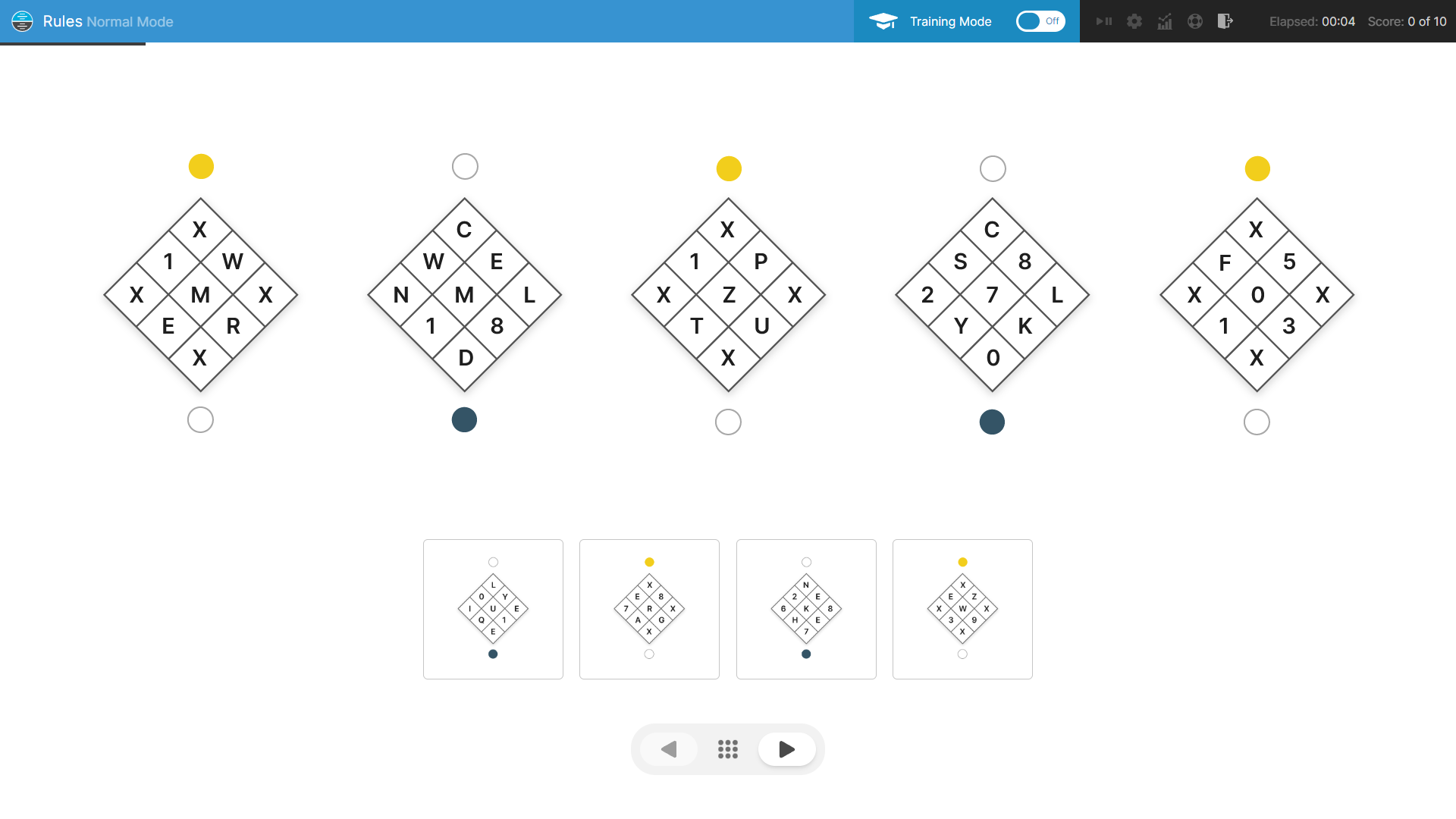
Multi-rule tasks present the candidate with a set of categorised examples (for example, grids divided into two colour-coded groups) and require them to identify the different rules governing each category. The candidate must discover not just one pattern, but two (or more) simultaneous rules that determine how elements are classified.
This task type is particularly demanding because the candidate must hold multiple hypotheses in mind simultaneously, testing each against the available examples and refining their understanding as new information is processed. It mirrors the operational demand of interpreting complex situations where multiple factors are at play simultaneously, such as assessing weather, traffic and terrain during an approach.
Multi-rule identification is assessed in the Aon Inductive-logical Thinking (scales cls) module.
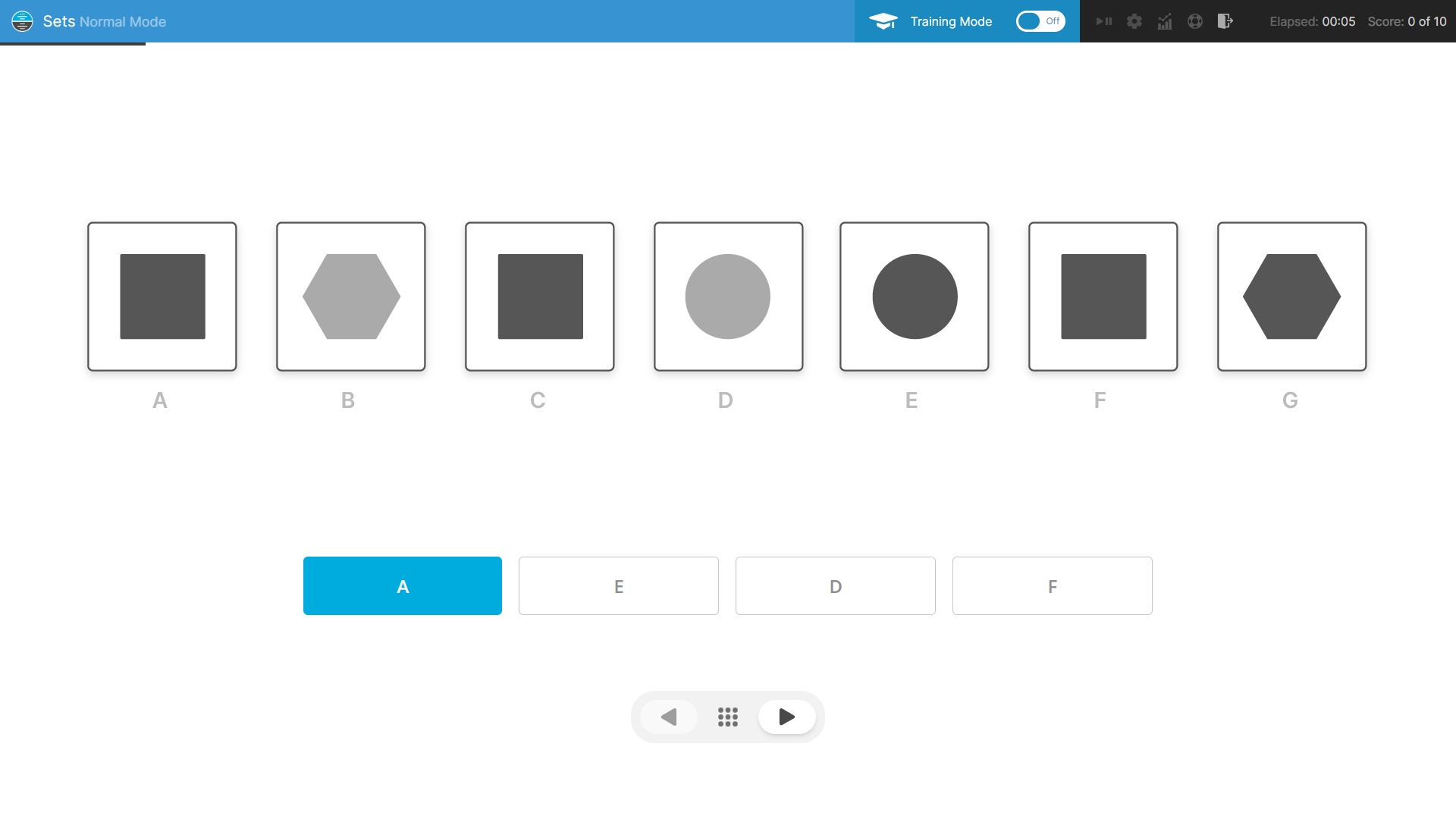
Odd-one-out tasks present the candidate with a series of visual elements that share a common property or follow a common rule, along with one element that does not conform. The candidate must identify the pattern, determine which element violates it, and select the anomaly.
This format tests the candidate's ability to perceive commonalities across diverse visual elements and to detect deviations from an established pattern. The cognitive demand increases when the common property is abstract (for example, a relationship between elements rather than a visible attribute) or when multiple plausible patterns could explain the data. Anomaly detection is directly relevant to cockpit operations, where pilots must notice when an instrument reading, system behaviour, or environmental cue does not fit the expected pattern.
Odd-one-out and pattern detection is assessed in both the Aon Inductive Reasoning (scales ix) module and the VTS Inductive Reasoning (FOLO) module.
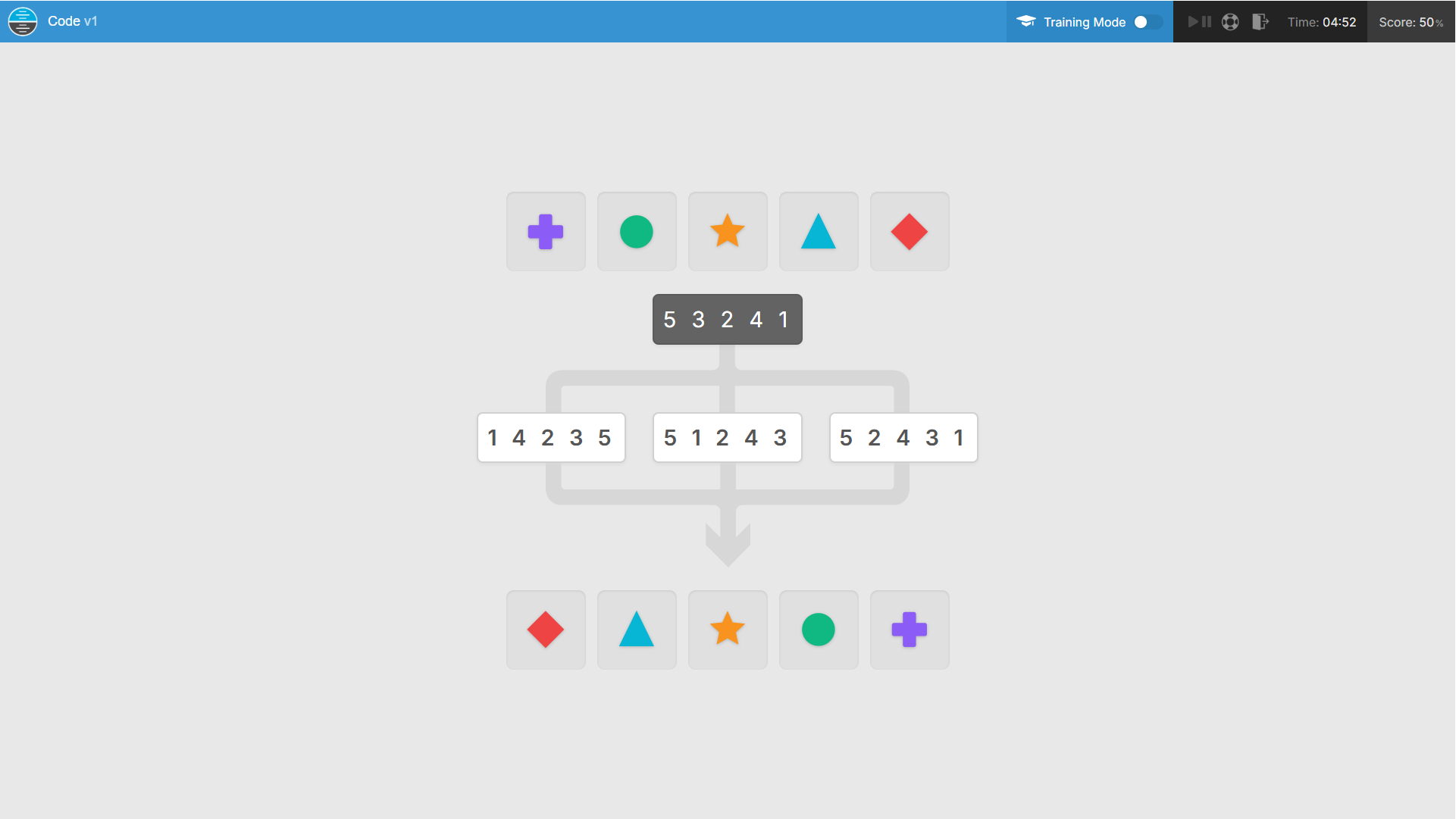
Input-output tasks present the candidate with a system that transforms inputs into outputs according to hidden rules. By observing the relationship between known inputs and their corresponding outputs, the candidate must induce the transformation rules and apply them to predict the output for a new input.
This task type requires systematic analysis: the candidate must isolate variables, test hypotheses, and build a mental model of how the system operates. It is one of the most cognitively demanding inductive reasoning formats because the rules may involve multiple sequential transformations, and the candidate must deduce the correct order and nature of each transformation from the observed data alone.
Input-output analysis is assessed in the Aon switchChallenge module.

Classification tasks with changing rules require the candidate to sort or categorise visual elements according to criteria that change as the task progresses. The candidate must identify the current classification rule, apply it correctly, and then adapt when the rule changes without explicit warning.
This format assesses both inductive reasoning (discovering the rule from the examples) and cognitive flexibility (adapting when the rule changes). The combination is particularly relevant to aviation, where procedures and priorities can change rapidly in response to evolving operational situations. The ability to recognise that the rules have changed and to update one's mental model accordingly is a critical pilot competency.
Rule application under changing conditions is assessed in the Arctic Shores Tickets module.
Inductive reasoning shares significant common ground with the broader skill of Logic, which is assessed as a separate competency in several pilot aptitude test systems. Many logic-based modules require the identification of patterns and the application of discovered rules, which are core inductive reasoning processes.
Candidates preparing for assessments that include logic-based modules (such as the Sova Logical Reasoning, the DLR Triangles (SKT), or the Arctic Shores Order modules) will find that strengthening their inductive reasoning ability provides a strong foundation for these tasks. For a full breakdown of logic-specific modules, see our dedicated Logic Knowledgebase Article.
Further Reading on Why Inductive Tests Use Abstract Stimuli
Culture-Fair Assessment
A defining feature of inductive reasoning tests is their use of abstract, non-verbal stimuli: shapes, symbols, grids and patterns rather than words or numbers. This design choice is deliberate and serves an important purpose in pilot selection.
Because pilot aptitude tests are used internationally by airlines and training organisations that recruit candidates from diverse linguistic, cultural and educational backgrounds, the tests must measure cognitive ability fairly regardless of the candidate's first language or educational history. Abstract visual stimuli achieve this by removing the influence of verbal knowledge, numerical fluency, and cultural familiarity from the assessment [2].
Research has consistently shown that abstract reasoning tests have lower cultural bias than verbal or numerical tests, making them particularly suitable for international selection programmes. The implication for candidates is that prior academic achievement or subject-specific knowledge provides no advantage; the tests measure the speed and accuracy with which the candidate can perceive patterns and generate rules from visual data, which is a fundamental cognitive ability.
Whilst each pilot aptitude assessment relies on the same underlying principles to evaluate inductive reasoning, the names and formats of the individual modules differ between test systems.
Effective preparation begins with identifying your assessment, understanding which modules evaluate inductive reasoning, and then engaging with targeted practice activities.
Inductive reasoning is one of the most frequently assessed cognitive abilities in pilot aptitude testing. It features prominently in the Aon (Cut-e) assessment, which includes four separate modules targeting different facets of the skill, as well as in the Vienna Test System and Arctic Shores assessments.
Select an assessment above to view its dedicated Knowledgebase Article for a full breakdown of all modules, not just those evaluating inductive reasoning.
Candidates preparing for the DLR or Sova assessments should also see our Logic Knowledgebase Article, as several modules within these test systems assess closely related pattern recognition and logical reasoning abilities.
Once you know which assessment you will be undertaking, use the table below to identify the specific modules within that assessment that evaluate inductive reasoning.
Each module targets a particular aspect of inductive ability, presented in a different format. The final column indicates which activity within our software corresponds to each module.
| Assessment | Module | Task Type | Format | Activity |
|---|---|---|---|---|
| Aon (Cut-e) | Inductive-logical Reasoning (scales clx) | Transformation Rules | Grid Comparison | Recognition |
| Aon (Cut-e) | Inductive-logical Thinking (scales cls) | Multi-Rule Identification | Diamond Grid Classification | Rules |
| Aon (Cut-e) | Inductive Reasoning (scales ix) | Odd-One-Out | Visual Sequence | Sets |
| Aon (Cut-e) | switchChallenge | Input-Output Analysis | System Manipulation | Code |
| Vienna Test System | Inductive Reasoning (FOLO) | Pattern Detection | Visual Sequence | Sets |
| Arctic Shores | Tickets | Classification / Sorting | Rule Application with Changing Criteria | Tickets |
Modules categorised under Logic (including the DLR Triangles, Dials and Signal Processing modules, the Sova Logical Reasoning module, and the Arctic Shores Order module) also draw significantly on inductive reasoning ability. See our Logic article for a full breakdown.
Having identified the modules relevant to your assessment, you can navigate directly to the corresponding activities within our software.
Our software organises activities by the type of assessment you are preparing for, the skill being evaluated, and the specific airline, flying school or cadet scheme you are applying to. This means you do not need to manually cross-reference the table above; the relevant inductive reasoning activities will already be included in your tailored preparation.
To find the activities relevant to you, navigate to one of the following within the software:
- Activities by Aptitude Test
- If you know which test system your assessment uses. For example, to find inductive reasoning activities for the Aon (Cut-e) assessment, navigate to Activities by Aptitude Test and select Aon (Cut-e).
- Activities by Skill
- If you want to focus specifically on inductive reasoning across all test systems. Navigate to Activities by Skill and select Inductive Reasoning to see every relevant activity.
- Activities by Airline, Flying School or Cadet Scheme
- If you know where you are applying but not which test system is used. Navigate to Activities by Airline or Activities by Flying School and select your chosen organisation. The software will include the appropriate inductive reasoning activities alongside all other relevant preparation.
If you have created a Preparation Strategy, the relevant inductive reasoning activities will already appear in your Focus Activities; no additional navigation is required.
Inductive reasoning is closely associated with several other competencies assessed in pilot aptitude testing. Candidates preparing for inductive reasoning modules may also benefit from developing the following related skills:
Academic Sources referenced in this KB Article
The following academic sources were consulted in the preparation of this article:
[1] Cattell, R.B. (1963). Theory of Fluid and Crystallized Intelligence: A Critical Experiment. Journal of Educational Psychology, 54(1), 1-22.
[2] Raven, J.C., Court, J.H. & Raven, J. (1998). Raven's Progressive Matrices and Vocabulary Scales. Oxford Psychologists Press.
[3] Klauer, K.C., Musch, J. & Naumer, B. (2000). On Belief Bias in Syllogistic Reasoning. Psychological Review, 107(4), 852-884.
[4] Schmidt, F.L. & Hunter, J.E. (1998). The Validity and Utility of Selection Methods in Personnel Psychology: Practical and Theoretical Implications of 85 Years of Research Findings. Psychological Bulletin, 124(2), 262-274.
[5] Endsley, M.R. (1995). Toward a Theory of Situation Awareness in Dynamic Systems. Human Factors, 37(1), 32-64.
[6] Hunter, D.R. & Burke, E.F. (1994). Predicting Aircraft Pilot Training Success: A Meta-Analysis of Published Research. International Journal of Aviation Psychology, 4(4), 297-313.
[7] Martinussen, M. (1996). Psychological Measures as Predictors of Pilot Performance: A Meta-Analysis. International Journal of Aviation Psychology, 6(1), 1-20.
[8] Carpenter, P.A., Just, M.A. & Shell, P. (1990). What One Intelligence Test Measures: A Theoretical Account of the Processing in the Raven Progressive Matrices Test. Psychological Review, 97(3), 404-431.
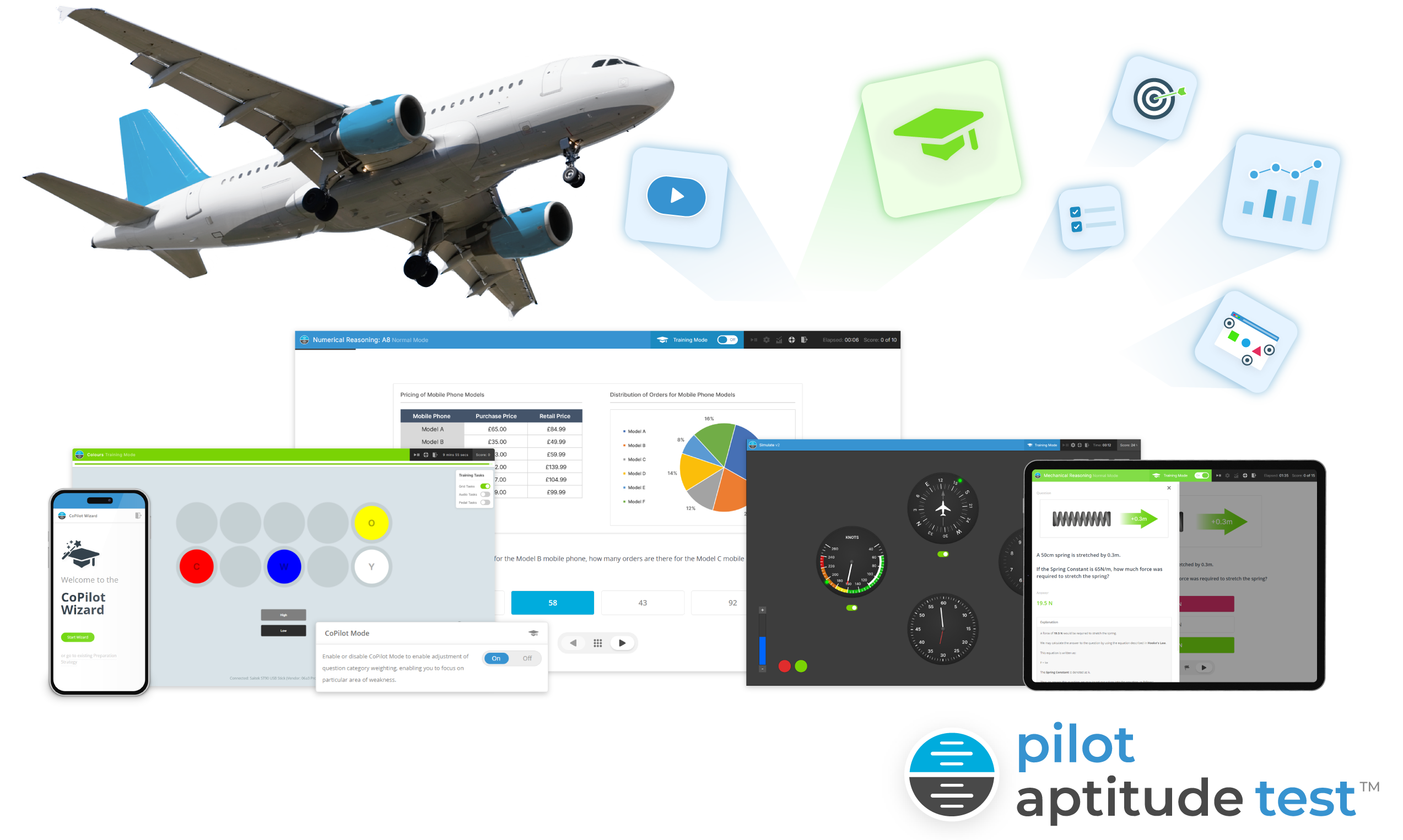
With a section dedicated to Inductive Reasoning, our one-of-a-kind software represents the ultimate way for you to get prepared.
By leveraging our cutting-edge software, including those unique features and extensive guidance not offered elsewhere, you can immerse yourself in realistic simulations, master those competencies assessed, and familiarise yourself with the methods and mechanisms of assessment.
Our software is backed by our meticulous attention to detail and deep expertise as experienced commercial pilots, empowering pilot applicants to approach their assessments with confidence and helping to propel them to supersonic levels of success.
Start using our incredible preparation software immediately on PC, Mac, iOS and Android by purchasing a subscription:
Buy Preparation SoftwareWith increasing prevalence and awareness of computerised pilot aptitude testing in pilot assessments, it's never been more important to ensure that you can fly past the competition. This is made easy with features unique to our software:












Discover the key advantages of using our cutting-edge software:
How can I prepare for my Inductive Reasoning pilot assessment?
The best way to prepare for your Inductive Reasoning pilot assessment is with our latest industry-leading software, developed over 5 years by experienced airline pilots. With realistic exam simulations, personalised Preparation Strategies which guide you through your preparation, immersive Explainer Videos, customisable Training Modes that manipulate your simulation environments, comprehensive Instruction and Guidance, and extensive performance feedback which incorporates unique features such as Predictive Scoring, a Strength & Weakness Map and Colour Coding, our unique software will help you to accelerate improvement of your problem areas and fly through each part of the Inductive Reasoning assessment. The software runs in a web browser, is compatible with laptop, desktop, tablet and smartphone, and is complimented with extensive support, provided from 9AM to 9PM GMT. To purchase a subscription to our software and start preparing for your Inductive Reasoning pilot assessment, click here!
What is the pass mark for the Inductive Reasoning pilot assessment?
Many pilot aptitude tests do not have a fixed threshold (or pass mark), but rather indicate the pilot candidate's overall performance and suitability using a variety of different methods - many of which are emulated within our software. Rather than worrying about a specific pass mark, the better approach is to focus on comprehensive preparation that maximizes your chances of success within each part of the Inductive Reasoning pilot assessment. Our industry-leading pilot preparation software provides that comprehensive preparation, helping you to develop the essential sklls, familiarity with assessment and confidence needed to perform at your best. If you have any questions about the Inductive Reasoning pilot assessment, please contact us.
How often is your Inductive Reasoning assessment preparation software updated?
Our pilot assessment preparation software is continuously updated, with daily improvements based on feedback from hundreds of monthly users. Developed by experienced airline pilots, the simulations provided within our unique software faithfully reflect the Inductive Reasoning pilot assessment, ensuring that you have the most current and comprehensive preparation. To see the recent updates to our preparation software, please visit our Updates page.
What support is available with your Inductive Reasoning assessment preparation software?
With our own industry experiences, we understand the pressures and stresses that come with preparing for pilot assessments. When you use our software to prepare for your Inductive Reasoning pilot assessment, you'll have access to exceptional support and guidance from our team of experienced airline pilots, provided between 9AM and 9PM GMT. This support sets us apart, helping you to develop the skills, knowledge, and confidence needed to approach your assessment feeling completely ready to demonstrate your true potential and fly past the competition at every stage of the Inductive Reasoning pilot assessment.
How quickly can I prepare for my Inductive Reasoning pilot assessment with this software?
If you'd like to start preparing for the Inductive Reasoning assessment, you may start using our software within as little as a few minutes. We offer access to our preparation software for 7 days, 1 month or 3 months, and provide the opportunity to purchase additional time. This ensures you can work through the comprehensive simulations, and benefit from our guidance at your own pace, with support available whenever you need it. To get started, choose a subscription duration to our preparation software, create an account and complete your purchase - then, login and begin your preparation. The entire process typically takes between 2-3 minutes, with secure payment by credit or debit card securely processed with Stripe or PayPal.
Feature-packed and one-of-a kind preparation software for your assessment.
Regularly updated, realistic and infinite simulations of aptitude tests.
Instant activation, fast support and uniquely in-depth guidance.