

 Maths for Pilots
 Science for Pilots
 English Language for Pilots
 Verbal Reasoning for Pilots
 Numerical Reasoning for Pilots
 Mechanical Reasoning for Pilots
 ATPL Knowledge for Pilots
 WhatsApp
 Facebook Chat
 Email
Email










































If you don't have time to read this article but would like to know whether our software can help - it can. You can buy access to our software and get started immediately, 365 days-a-year.
Buy Preparation SoftwareNumerical Reasoning describes the ability to interpret, analyse and draw conclusions from numerical data presented in various formats. In pilot aptitude testing, Numerical Reasoning is assessed as the candidate's capacity to work with data in tables, charts, graphs and written scenarios, extracting the relevant information and applying mathematical operations to reach accurate conclusions. Numerical Reasoning is distinct from Mathematics. Whereas Mathematics modules assess the ability to perform calculations (arithmetic, algebra, unit conversions), Numerical Reasoning modules assess the ability to interpret data, identify what calculation is needed, and evaluate whether a conclusion is supported by the numbers. The mathematical operations involved are typically straightforward; the challenge lies in understanding the data and reasoning from it correctly. The specific demands vary between modules, but collectively the types of numerical reasoning assessed include:
The central challenge of Numerical Reasoning is working out what the data means rather than simply performing calculations. Candidates must read data accurately from different visual formats, determine which data points are relevant to the question, select the correct operation, and evaluate whether a stated conclusion follows from the numbers. This process of evidence-based numerical judgement is what distinguishes Numerical Reasoning from pure mathematical computation.
Further Reading on Numerical Reasoning vs Mathematics
The Distinction Between Numerical Reasoning and Mathematical Ability
Psychometric research distinguishes between quantitative reasoning (the ability to reason with numerical information) and numerical facility (the ability to perform arithmetic operations quickly and accurately) [1]. Pilot aptitude tests assess both, but they are classified differently: modules that focus on data interpretation and evidence evaluation are classified as Numerical Reasoning, whilst modules that focus on computational speed and accuracy are classified as Mathematics.
In practice, the two skills overlap. A candidate cannot reason effectively from numerical data if they cannot perform the underlying calculations, and raw computational speed is of limited value if the candidate cannot determine which calculation to perform. However, the distinction matters for preparation: Numerical Reasoning modules reward the ability to read data carefully, identify what is being asked, and resist over-interpreting the numbers, whilst Mathematics modules reward speed and accuracy in computation [2].
Numerical reasoning is exercised whenever you need to draw a conclusion from data rather than simply calculate an answer. Comparing energy bills across several months by reading a bar chart, working out which supermarket offer represents better value by comparing unit prices from different pack sizes, or evaluating whether a company's revenue graph shows genuine growth or simply reflects inflation are all numerical reasoning tasks. In each case, the challenge is not the arithmetic itself but understanding what the data is telling you and whether a particular interpretation is justified.
A more demanding example is interpreting a financial statement or a table of statistics and determining whether a specific claim is supported by the data. If someone states that "sales increased by 20% last quarter," numerical reasoning is what allows you to check whether this is true, false, or impossible to determine from the figures provided. This is directly analogous to the True/False/Cannot Say format used in several pilot aptitude Numerical Reasoning modules, where the candidate must evaluate a statement against data rather than simply compute an answer.
Pilots work with numerical data continuously: performance figures, fuel calculations, weather data, weight and balance computations, and navigation information. The ability to interpret this data correctly and draw accurate operational conclusions from it is essential for safe and efficient flight operations.
- Performance data interpretation:
- Before every departure, the crew must determine the aircraft's takeoff performance: the speeds (V1, VR, V2), the maximum takeoff weight, and any runway length limitations. This involves reading data from performance charts or electronic systems, interpreting it in the context of the current conditions (temperature, pressure altitude, wind, runway slope, runway condition), and verifying that the resulting figures are reasonable. A misread value, a misinterpreted table entry, or a failure to account for a relevant condition can result in the aircraft being dispatched at a weight that exceeds the runway's capability. This is a numerical reasoning task: the pilot must extract the correct data, apply the relevant factors, and evaluate whether the result makes operational sense.
- Fuel planning and monitoring:
- Fuel planning requires the pilot to interpret data from multiple sources (flight plan fuel figures, actual fuel on board, sector burn rates, weather-related fuel adjustments) and draw conclusions about whether the fuel state is adequate. During flight, fuel monitoring involves comparing actual consumption against planned figures and determining whether any deviation requires action. This is not simply arithmetic; it requires the pilot to assess whether the data indicates a normal situation, a trend that needs watching, or a problem that requires immediate action. Misinterpreting fuel data has been a contributing factor in fuel exhaustion accidents.
- Weather data analysis:
- Numerical weather data (wind components, visibility values, cloud base heights, temperature and dewpoint spreads) must be interpreted to determine their operational significance. Calculating a crosswind component from the reported wind direction and speed relative to the runway heading, or determining whether the temperature-dewpoint spread indicates a risk of fog formation, are numerical reasoning tasks that combine data extraction with applied calculation. The pilot must identify which numbers are relevant, perform the correct operation, and evaluate the result in context.
- Weight and balance:
- Ensuring the aircraft is loaded within its weight and centre-of-gravity limits requires interpreting data from the loadsheet, verifying it against the aircraft's limitations, and determining whether any changes (last-minute passengers, cargo adjustments, fuel uplift changes) affect the outcome. The pilot must read tables, compare values against limits, and evaluate whether the overall picture is within acceptable parameters. An error in interpreting weight and balance data can result in an aircraft that is outside its certified limits, with direct consequences for handling and safety.
- Power available vs power required:
- Helicopter performance planning centres on comparing the power available (which varies with altitude, temperature, and aircraft weight) against the power required for the planned operation (hover, takeoff, cruise, landing). The pilot must read performance charts, interpolate between data points, and determine whether adequate power margins exist. This numerical reasoning task is performed before every flight and re-evaluated whenever conditions change (for example, if the destination altitude or temperature differs from what was planned).
- Speed, distance and time calculations:
- Helicopter operations frequently require the pilot to calculate estimated times of arrival, fuel consumption for a given routing, or the distance that can be covered with the remaining fuel. These calculations draw on data from multiple sources (groundspeed from the GPS, fuel flow from the fuel computer, wind from the forecast or actual experience) and require the pilot to synthesise the numerical information into an operational conclusion. The CBAT Airborne Numerical Test and Mathematics Reasoning modules directly assess this type of applied numerical reasoning.
- Mission planning data:
- In operations such as HEMS, SAR, or offshore transport, the pilot must interpret mission-specific numerical data: distances to hospitals or rigs, available fuel vs required fuel for the return leg, weight restrictions for specific landing sites, and time-critical parameters such as patient transfer windows or daylight limits. The ability to process multiple numerical inputs quickly and reach an accurate operational conclusion is essential for effective mission planning under time pressure.
Aviation operations generate and consume large quantities of numerical data. The pilot must continuously interpret this data and make decisions based on it: is the fuel state adequate, is the performance within limits, does the weather meet the required criteria, is the aircraft on the correct profile? These are all numerical reasoning tasks. A pilot who can accurately extract information from data sources, determine what it means, and evaluate whether a particular conclusion is supported by the numbers is better equipped to make safe operational decisions.
The True/False/Cannot Say format used in some Numerical Reasoning modules is particularly relevant: it tests the candidate's ability to determine not just whether a calculation yields a particular result, but whether a stated conclusion is actually supported by the available data. This mirrors the operational discipline of checking that the data supports the intended course of action, rather than proceeding on assumption.
The ATPL theoretical knowledge examinations include substantial numerical content across subjects such as General Navigation, Flight Planning, Mass and Balance, Meteorology, and Aircraft Performance. These examinations require candidates to interpret data from tables, charts, and graphs, and to apply numerical reasoning to reach correct answers. Strong numerical reasoning directly supports examination performance, as many questions test the ability to work with data rather than simply recall formulae [3].
Throughout a pilot's career, recurrent training, operator proficiency checks, and regulatory updates all involve working with numerical information. The ability to quickly and accurately interpret performance data, fuel figures, and operational limits is a skill that is exercised daily and assessed regularly.
Numerical Reasoning is assessed across Aon (Cut-e), CBAT / CFAST / MACTS and Sova assessments. The Aon assessment includes two distinct modules: a data interpretation module that uses True/False/Cannot Say evaluation of statements against charts and tables, and an equation completion module that tests basic numerical comprehension through drag-and-drop. The CBAT assessment includes three modules that incorporate numerical reasoning: the Airborne Numerical Test (speed, distance and time from route data), the Mathematics Reasoning module (SDT word problems), and the System Logic Test (multi-source verbal and numerical synthesis). The Sova assessment uses a multiple-choice data interpretation format within a blended assessment.
Further Reading on Numerical Reasoning in Selection
Numerical Ability and Pilot Training Success
Research into pilot selection has consistently shown that numerical ability contributes to the prediction of training success, particularly for ground school performance and the acquisition of technical knowledge [3]. The predictive relationship is partly mediated through general cognitive ability, but numerical reasoning also contributes unique variance, particularly for subjects that involve working with performance data, navigation calculations, and meteorological interpretation.
Modern Numerical Reasoning tests have moved beyond simple computation towards data interpretation and evidence evaluation. This evolution reflects a recognition that the relevant numerical skill for pilots is not raw arithmetic speed (which is better assessed by Mathematics modules) but the ability to work with complex data, identify the relevant information, and reach accurate conclusions under time pressure [4]. The tabbed data presentation used in the Aon module and the multi-source format used in the CBAT System Logic Test are examples of this more sophisticated approach.
Computerised pilot aptitude tests evaluate Numerical Reasoning by presenting the candidate with data in various formats and requiring them to interpret it, perform calculations, or evaluate statements. The specific format varies between modules, from True/False/Cannot Say evaluation of data-driven statements to applied speed-distance-time calculations from operational scenarios.
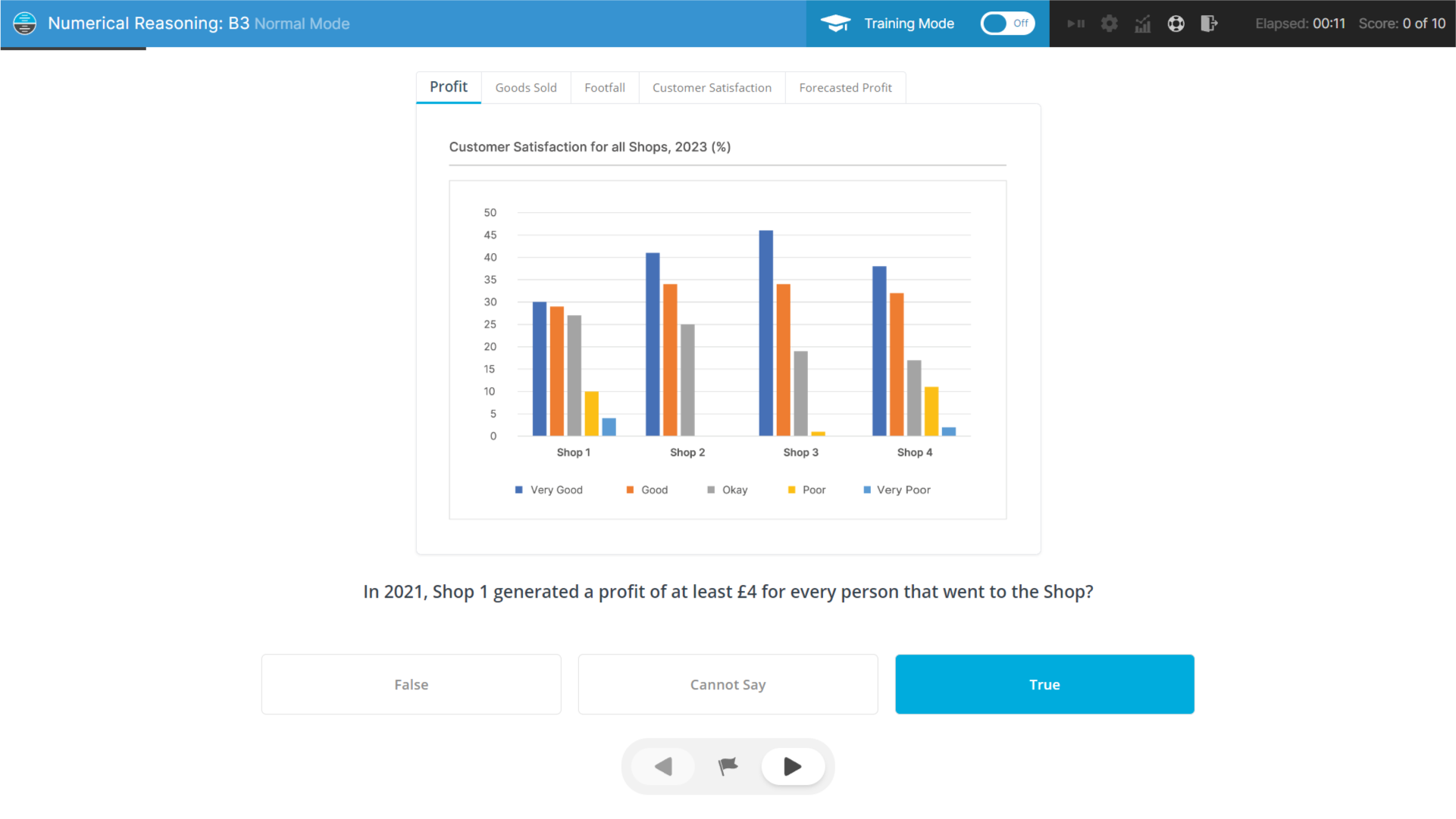
The Aon Numerical Reasoning (scales numerical) module presents data from a variety of sources including bar charts, line charts, pie charts, diagrams and tables, distributed across multiple tabs that the candidate must navigate between. For each question, the candidate must locate the relevant data, interpret it, and evaluate a statement as True (supported by the data), False (contradicted by the data), or Cannot Say (the data does not provide sufficient information).
Two forms of this module exist, in longer and shorter variants, with 37 questions across 12 minutes. The tabbed format adds an information-retrieval demand: the candidate must identify which data source contains the relevant information before they can evaluate the statement. This mirrors the operational task of consulting the correct chart, table, or document when checking a performance figure or fuel value. The True/False/Cannot Say format means the candidate is assessed not just on calculation accuracy but on their ability to determine whether the data actually supports the stated conclusion.
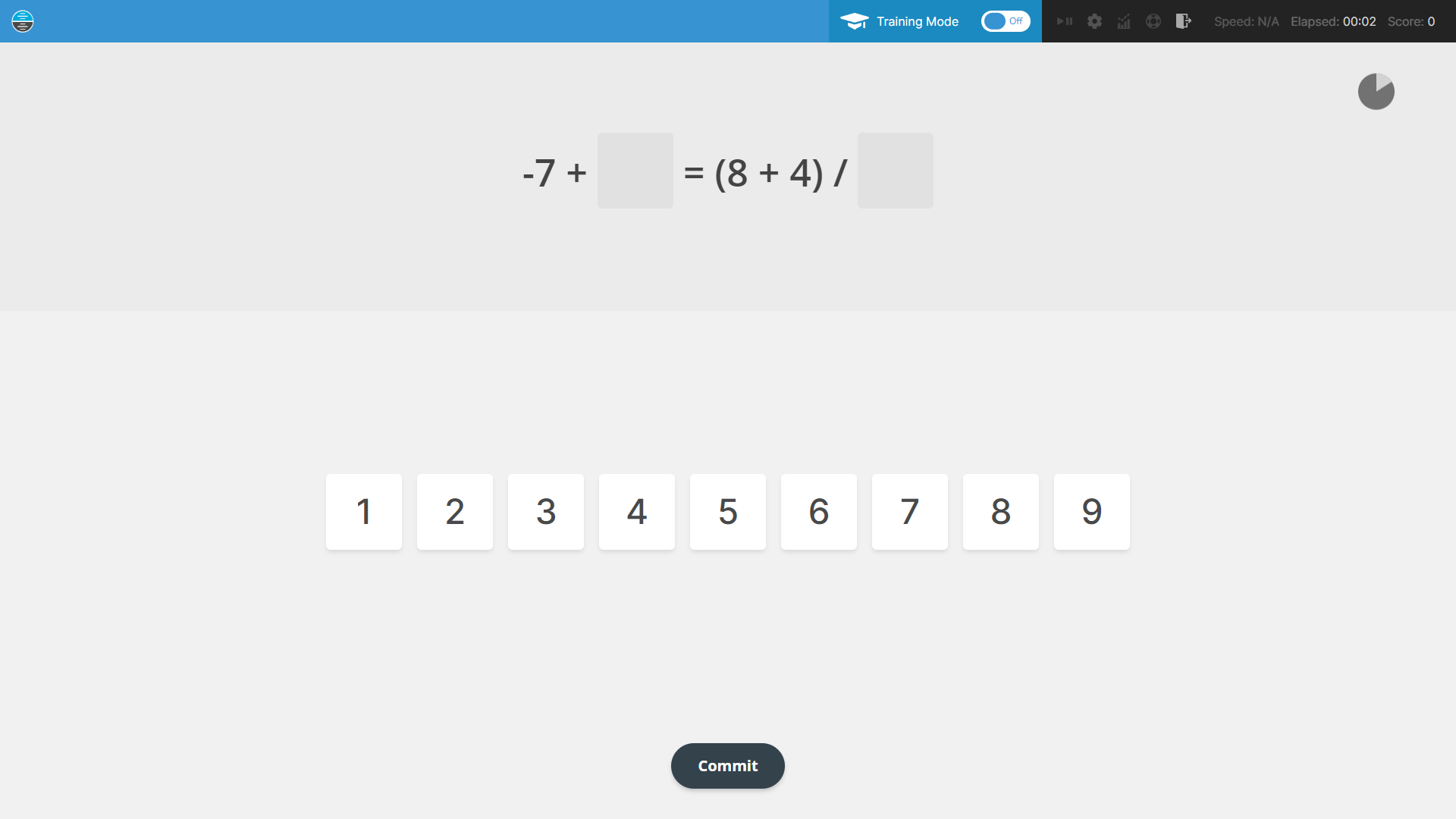
The Aon Numerical Reasoning (scales eql) module presents equations with missing parts and requires the candidate to complete them by selecting from the numbers provided using a drag-and-drop action. The equations involve addition, subtraction and multiplication, and the candidate must determine which numbers, placed in which positions, make the equation correct. With 15 questions in 5 minutes, the emphasis is on rapid numerical comprehension.
This module differs considerably from the data interpretation format. Rather than evaluating statements against data, the candidate must reason about numerical relationships: which combination of values satisfies the equation. This requires both arithmetic fluency and the ability to work backwards from a required result to identify the correct inputs, a form of numerical reasoning that is distinct from straightforward computation.
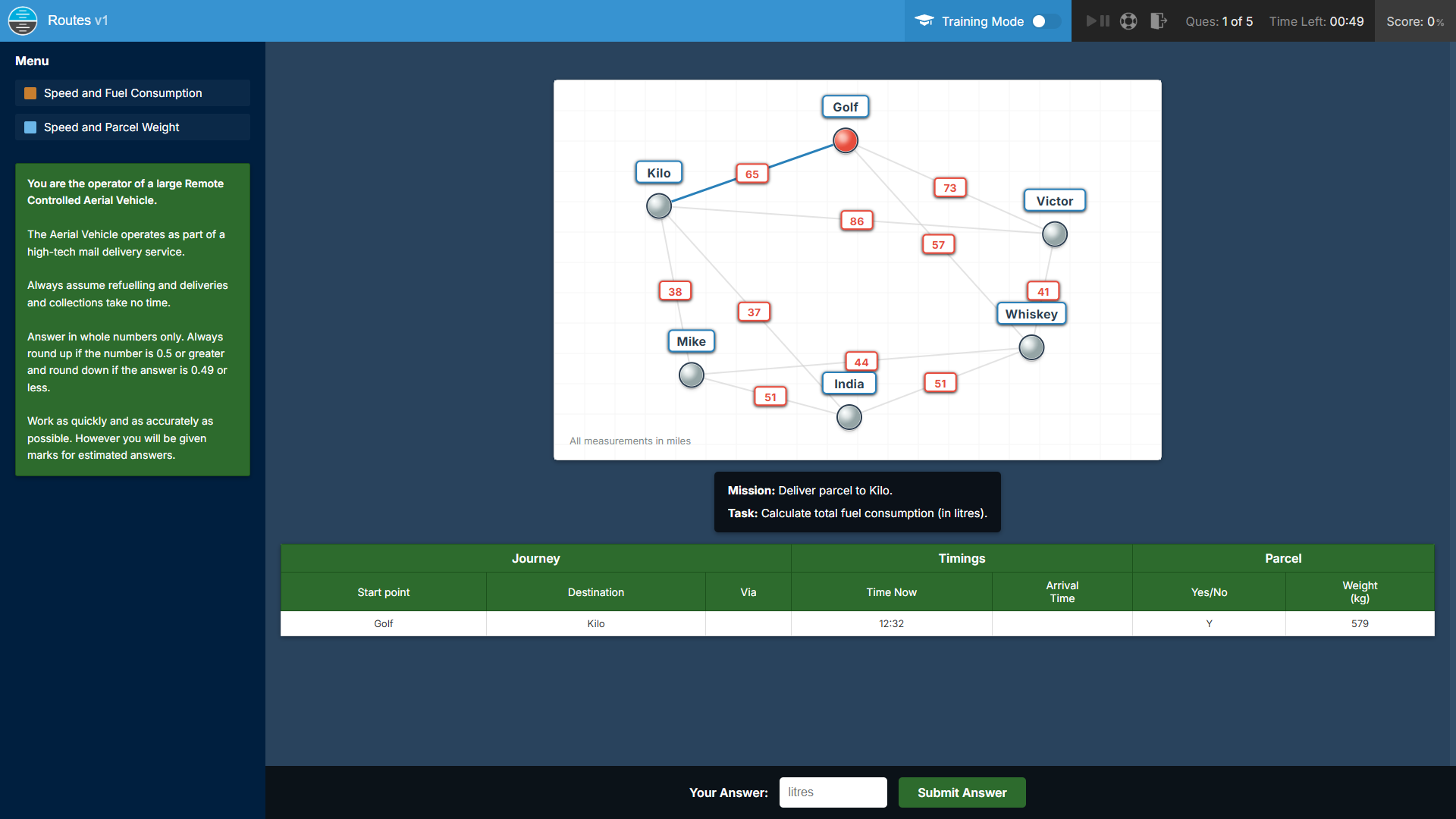
The CBAT Airborne Numerical Test (ANT) requires the candidate to examine information from multiple sources and calculate precise answers using speed, distance and time equations. The module presents route-based information and requires the candidate to interpret the data and apply mathematical formulae to determine correct values under time pressure.
The ANT is distinctive in combining numerical reasoning with spatial awareness: the candidate must interpret route information (which has a spatial component) and extract the numerical data needed for SDT calculations. This dual demand reflects the operational reality of flight planning, where the pilot must read route information from a chart or flight plan and apply numerical reasoning to determine fuel requirements, timing, and performance figures.
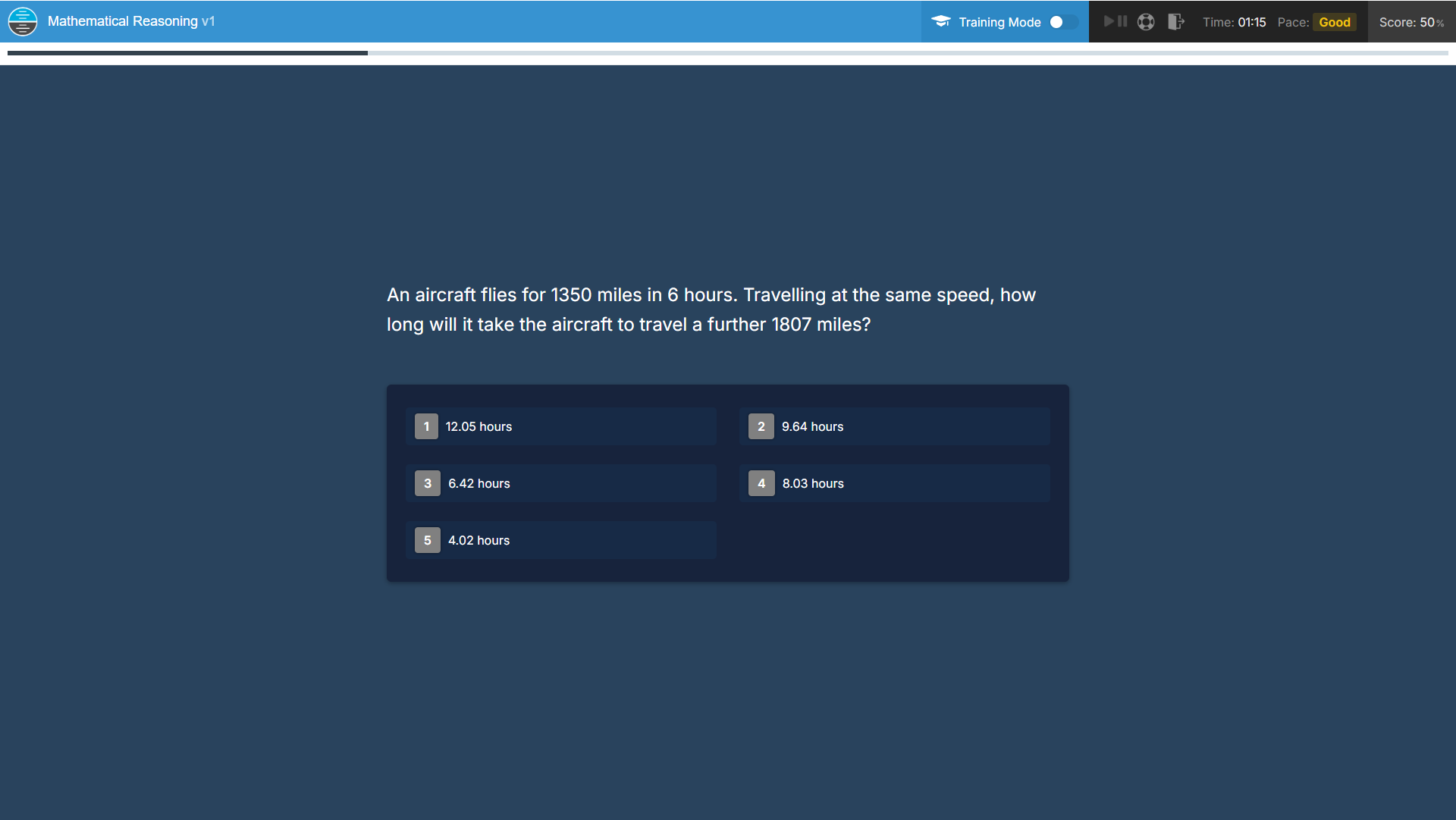
The CBAT Mathematics Reasoning (MAT-B) module requires the candidate to calculate answers to word problems that incorporate the concepts of speed, distance and time. The questions use real-world scenarios and require the candidate to apply mathematical knowledge to determine the correct answer.
The word problem format adds a comprehension layer to the numerical task: the candidate must first understand the scenario described in the question, identify the relevant numerical information, determine which formula or approach is needed, and then perform the calculation. This is a more applied form of numerical reasoning than abstract computation, as it requires the candidate to translate a verbal description of a situation into a mathematical problem before solving it.
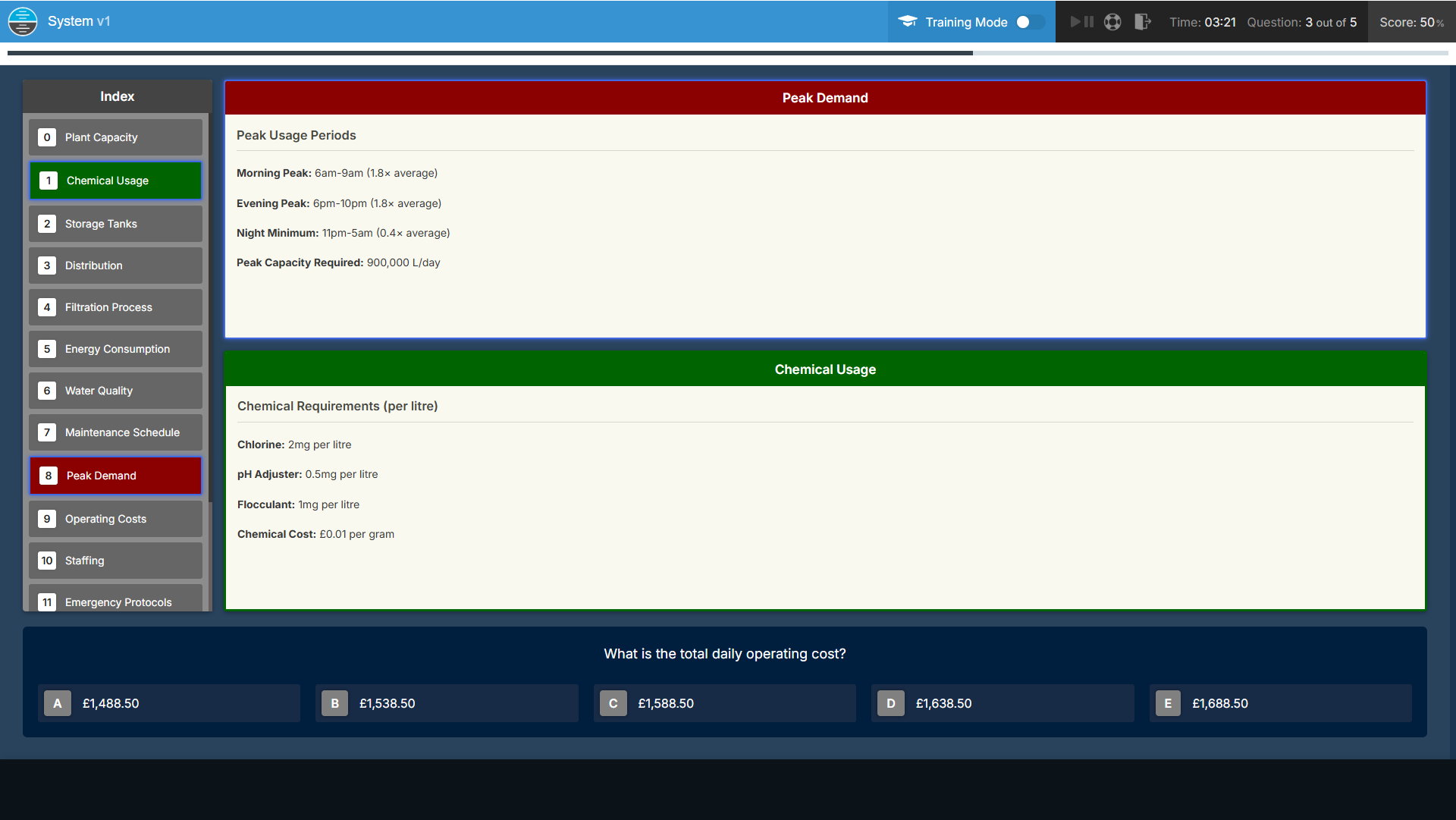
The CBAT System Logic Test (SLT) requires the candidate to examine information and data from a variety of sources to answer questions that combine mathematical and verbal reasoning. The candidate must interpret and synthesise information from multiple written and numerical sources, applying both logical and mathematical reasoning to determine the correct responses.
The SLT combines verbal comprehension with numerical problem-solving: the candidate must first understand what the written information is telling them and then apply numerical operations to the extracted data. This dual demand reflects operational tasks such as interpreting a performance manual (reading the conditions and limitations, then applying the numerical data) or processing a dispatch brief (understanding the written scenario, then working with the figures provided). This module also appears in the Verbal Reasoning article.
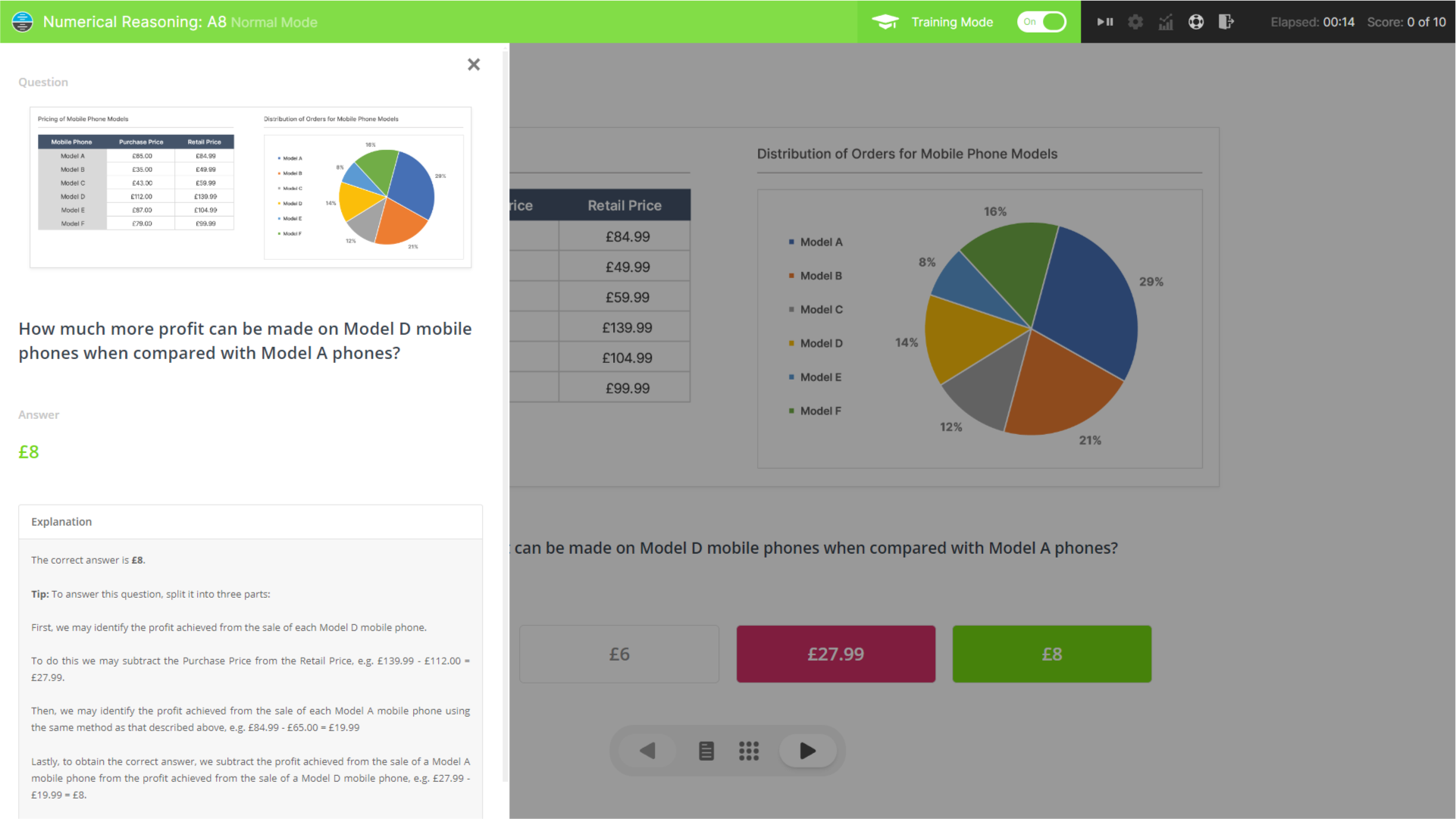
The Sova Numerical Reasoning component requires interrogation of data provided and the application of basic mathematics to reach a conclusion. Questions are presented with multiple-choice answers and accompanied by tables, charts or graphs. In Sova assessments, Numerical Reasoning is part of a blended assessment that also includes Logical Reasoning, Verbal Reasoning, and Checking & Accuracy, with the full assessment containing between 50 and 80 questions across 25 to 30 minutes.
The multiple-choice format differs from the True/False/Cannot Say approach: the candidate must calculate a specific answer rather than evaluate a statement. However, the underlying demand is similar: the candidate must read the data accurately, determine the correct operation, and select the answer that matches their calculation. The blended format means the candidate must switch between numerical, verbal, and logical question types within the same timed assessment.
Numerical Reasoning is assessed in the following pilot aptitude test systems:
The table below outlines the Numerical Reasoning modules in each assessment, linking each to the relevant preparation activity in our software.
| Assessment | Module | Reasoning Type | Format | Activity |
|---|---|---|---|---|
| Aon (Cut-e) | Numerical Reasoning (scales numerical) | Data Interpretation | 37 questions, 12 min | NR B-Series |
| Aon (Cut-e) | Numerical Reasoning (scales eql) | Equation Completion | 15 questions, 5 min | Calculate |
| CBAT / CFAST / MACTS | Airborne Numerical Test (ANT) | Applied SDT + Spatial | TBC | Routes |
| CBAT / CFAST / MACTS | Mathematics Reasoning (MAT-B) | SDT Word Problems | TBC | Mathematical Reasoning |
| CBAT / CFAST / MACTS | System Logic Test (SLT) | Verbal + Numerical Synthesis | TBC | System |
| Sova | Numerical Reasoning | Data Interpretation | Blended, 25-30 min total | NR A-Series NR B-Series |
Having identified the modules relevant to your assessment, you can navigate directly to the corresponding activities within our software.
Our software organises activities by the type of assessment you are preparing for, the skill being evaluated, and the specific airline, flying school or cadet scheme you are applying to. This means you do not need to manually cross-reference the table above; the relevant Numerical Reasoning activities will already be included in your tailored preparation.
To find the activities relevant to you, navigate to one of the following within the software:
- Activities by Aptitude Test
- If you know which test system your assessment uses. For example, to find Numerical Reasoning activities for Aon (Cut-e), navigate to Activities by Aptitude Test and select Aon (Cut-e).
- Activities by Skill
- If you want to focus specifically on Numerical Reasoning across all test systems. Navigate to Activities by Skill and select Numerical Reasoning to see every relevant activity.
- Activities by Airline, Flying School or Cadet Scheme
- If you know where you are applying but not which test system is used. Navigate to Activities by Airline or Activities by Flying School and select your chosen organisation. The software will include the appropriate Numerical Reasoning activities alongside all other relevant preparation.
If you have created a Preparation Strategy, the relevant Numerical Reasoning activities will already appear in your Focus Activities; no additional navigation is required.
Numerical Reasoning is closely associated with several other competencies assessed in pilot aptitude testing. Candidates preparing for Numerical Reasoning modules may also benefit from developing the following related skills:
Academic Sources referenced in this KB Article
The following academic sources were consulted in the preparation of this article:
[1] Carroll, J. B. (1993). Human Cognitive Abilities: A Survey of Factor-Analytic Studies. Cambridge University Press.
[2] SHL Group. (2006). Numerical Reasoning Test: Technical Manual. SHL Group Ltd.
[3] Hunter, D. R., & Burke, E. F. (1994). Predicting aircraft pilot-training success: A meta-analysis of published research. The International Journal of Aviation Psychology, 4(4), 297-313.
[4] Carretta, T. R., & Ree, M. J. (1996). Factor structure of the Air Force Officer Qualifying Test: Analysis and comparison. Military Psychology, 8(1), 29-42.
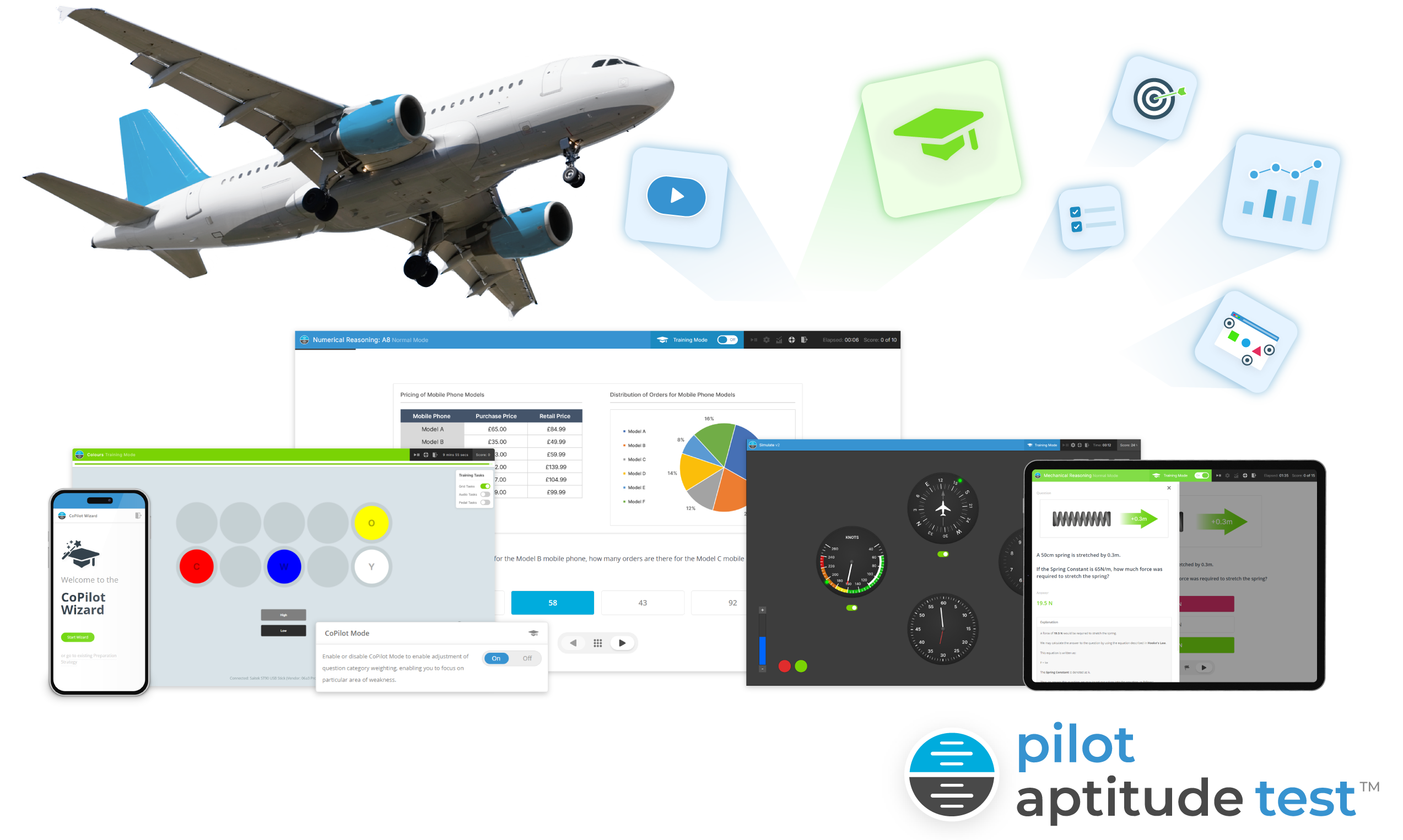
With a section dedicated to Numerical Reasoning, our one-of-a-kind software represents the ultimate way for you to get prepared.
By leveraging our cutting-edge software, including those unique features and extensive guidance not offered elsewhere, you can immerse yourself in realistic simulations, master those competencies assessed, and familiarise yourself with the methods and mechanisms of assessment.
Our software is backed by our meticulous attention to detail and deep expertise as experienced commercial pilots, empowering pilot applicants to approach their assessments with confidence and helping to propel them to supersonic levels of success.
Start using our incredible preparation software immediately on PC, Mac, iOS and Android by purchasing a subscription:
Buy Preparation SoftwareWith increasing prevalence and awareness of computerised pilot aptitude testing in pilot assessments, it's never been more important to ensure that you can fly past the competition. This is made easy with features unique to our software:












Discover the key advantages of using our cutting-edge software:
How can I prepare for my Numerical Reasoning pilot assessment?
The best way to prepare for your Numerical Reasoning pilot assessment is with our latest industry-leading software, developed over 5 years by experienced airline pilots. With realistic exam simulations, personalised Preparation Strategies which guide you through your preparation, immersive Explainer Videos, customisable Training Modes that manipulate your simulation environments, comprehensive Instruction and Guidance, and extensive performance feedback which incorporates unique features such as Predictive Scoring, a Strength & Weakness Map and Colour Coding, our unique software will help you to accelerate improvement of your problem areas and fly through each part of the Numerical Reasoning assessment. The software runs in a web browser, is compatible with laptop, desktop, tablet and smartphone, and is complimented with extensive support, provided from 9AM to 9PM GMT. To purchase a subscription to our software and start preparing for your Numerical Reasoning pilot assessment, click here!
What is the pass mark for the Numerical Reasoning pilot assessment?
Many pilot aptitude tests do not have a fixed threshold (or pass mark), but rather indicate the pilot candidate's overall performance and suitability using a variety of different methods - many of which are emulated within our software. Rather than worrying about a specific pass mark, the better approach is to focus on comprehensive preparation that maximizes your chances of success within each part of the Numerical Reasoning pilot assessment. Our industry-leading pilot preparation software provides that comprehensive preparation, helping you to develop the essential sklls, familiarity with assessment and confidence needed to perform at your best. If you have any questions about the Numerical Reasoning pilot assessment, please contact us.
How often is your Numerical Reasoning assessment preparation software updated?
Our pilot assessment preparation software is continuously updated, with daily improvements based on feedback from hundreds of monthly users. Developed by experienced airline pilots, the simulations provided within our unique software faithfully reflect the Numerical Reasoning pilot assessment, ensuring that you have the most current and comprehensive preparation. To see the recent updates to our preparation software, please visit our Updates page.
What support is available with your Numerical Reasoning assessment preparation software?
With our own industry experiences, we understand the pressures and stresses that come with preparing for pilot assessments. When you use our software to prepare for your Numerical Reasoning pilot assessment, you'll have access to exceptional support and guidance from our team of experienced airline pilots, provided between 9AM and 9PM GMT. This support sets us apart, helping you to develop the skills, knowledge, and confidence needed to approach your assessment feeling completely ready to demonstrate your true potential and fly past the competition at every stage of the Numerical Reasoning pilot assessment.
How quickly can I prepare for my Numerical Reasoning pilot assessment with this software?
If you'd like to start preparing for the Numerical Reasoning assessment, you may start using our software within as little as a few minutes. We offer access to our preparation software for 7 days, 1 month or 3 months, and provide the opportunity to purchase additional time. This ensures you can work through the comprehensive simulations, and benefit from our guidance at your own pace, with support available whenever you need it. To get started, choose a subscription duration to our preparation software, create an account and complete your purchase - then, login and begin your preparation. The entire process typically takes between 2-3 minutes, with secure payment by credit or debit card securely processed with Stripe or PayPal.
Feature-packed and one-of-a kind preparation software for your assessment.
Regularly updated, realistic and infinite simulations of aptitude tests.
Instant activation, fast support and uniquely in-depth guidance.